
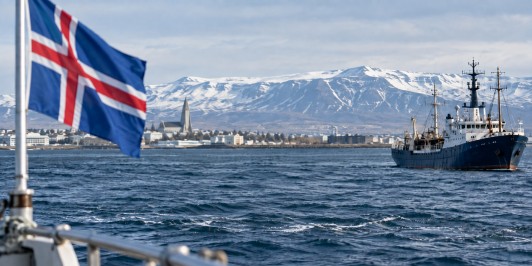
Iceland is set to propose legislation that would permanently prohibit commercial whaling, potentially leaving Japan and Norway as the only nations continuing the practice. The Icelandic government intends to present the bill to parliament by February, aiming to establish a long-term ban amid years of debate and resistance from animal welfare and conservation advocates.
The country’s whaling industry, which primarily hunts fin whales classified as vulnerable, has been under scrutiny. This year’s hunting season, spanning from June to September, saw numerous fin whales captured under a government-sanctioned quota. The proposed legislation has garnered substantial support from animal welfare groups citing ethical, environmental, and conservation concerns.
Commercial whaling in Iceland resumed in 2006, despite an international moratorium set in 1986 to safeguard whale populations. Norway followed suit in 1993, while Japan withdrew from the International Whaling Commission in 2019, resuming its commercial whaling activities in its territorial waters and exclusive economic zone. Should Iceland’s legislative proposal gain approval, only Norway and Japan would persist with commercial whaling operations.
It’s important to note that the international moratorium on commercial whaling still permits indigenous communities in certain areas, such as parts of Greenland and Alaska, to hunt whales for cultural, nutritional, and traditional purposes. This proposed ban in Iceland marks a significant step in the global effort to end commercial whaling and protect vulnerable marine species.