
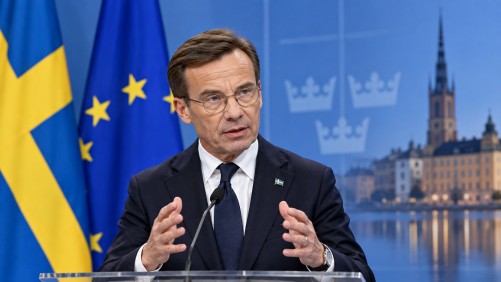
Swedish Prime Minister Ulf Kristersson has stepped down following a narrow election victory by the centre-left opposition. The Social Democrats, led by Magdalena Andersson, emerged with a slight majority, securing 176 seats in the Swedish parliament, three more than Kristersson’s right-leaning bloc.
With the election results now paving the way for Andersson to attempt to form a new government, she faces the challenge of negotiating with various opposition parties to establish a stable coalition. Andersson has highlighted climate policy, education, healthcare, elderly care, and immigration as her administration’s priorities, reflecting the electorate’s desire for a new direction in Sweden.
Talks have commenced between Andersson and the Left, Centre, and Green parties to explore potential cooperation. However, key differences concerning taxation, immigration, and climate policies could complicate these discussions, alongside questions about party roles in any future government.
Kristersson, who took office in 2022, formally submitted his resignation, allowing the parliamentary speaker to initiate the process for forming a new government. The Sweden Democrats, previously a strong supporter of Kristersson’s administration, saw a decrease in their parliamentary influence, dropping from the second-largest to the third-largest party.
In Sweden’s parliamentary system, minority governments often govern through collaborations with other parties, and Andersson will likely seek broad support to ensure a viable governing structure. As negotiations continue, Sweden’s political landscape may see significant shifts based on the outcome of these coalition talks.