
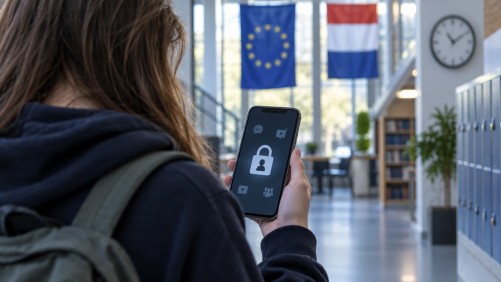
The Dutch government has endorsed an EU-wide initiative to establish a unified minimum age for social media use, proposing a threshold of 15 years. This move, backed by the Netherlands and Spain, aims to create consistent safety standards across the European Union. Dutch Digital Economy Minister Willemijn Aerdts emphasized the importance of ensuring that the safety protocols applicable to children offline are equally enforced in the digital sphere.
The proposal, presented to the European Commission, includes the adoption of privacy-friendly age verification methods. The commission is expected to integrate these recommendations into its forthcoming proposals focused on safeguarding minors from the risks associated with social media, as part of broader discussions on digital policy.
The topic of age restrictions on social media has gained traction, particularly as individual nations implement their own regulations. Notably, Australia imposed a ban on users under 16 accessing major social media platforms in December 2025, while France followed suit with a similar restriction for those under 15 earlier this month. The United Kingdom has also announced intentions to implement comparable age limits by 2027.
However, the challenge of effectively verifying users’ ages remains a point of contention. Privacy advocates have expressed concerns regarding the operational aspects of age verification systems. In April, the European Commission introduced an age-checking app, but it faced security vulnerabilities when a researcher demonstrated a method to bypass it, leading to a subsequent security update.