
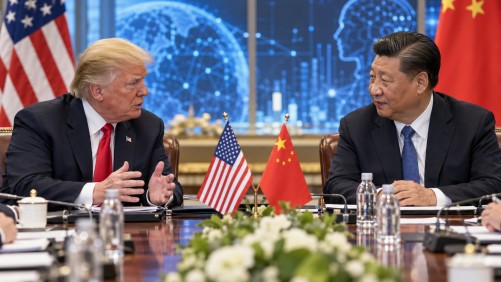
During a summit on September 25, U.S. President Donald Trump and Chinese President Xi Jinping discussed the ongoing conflict in the Middle East, as Iran proposed a seven-day plan aimed at reopening the Strait of Hormuz and reducing regional tensions. The discussions come amid heightened tensions in the region affecting energy flows and security.
Chinese President Xi urged the United States and Iran to revert to the previous framework established in June, which had facilitated a temporary ceasefire and negotiations towards a broader peace agreement. While Iran expressed approval of this suggestion, it also pushed forward its own seven-day plan to address the situation.
Iranian Foreign Minister Abbas Araqchi outlined the plan, which includes reopening the Strait of Hormuz to allow maritime traffic to resume, contingent on U.S. acceptance. It also calls for ending hostilities, lifting the U.S. blockade on Iranian ports, releasing frozen Iranian assets, and removing oil sanctions. However, the United States has not publicly accepted the proposal, though it indicated that mediator-led discussions were progressing constructively, particularly regarding nuclear issues.
The situation is further complicated by Iran’s firm stance on its nuclear program, with no willingness to compromise on uranium enrichment, a point of contention in previous negotiations. Meanwhile, President Trump cautioned Xi against providing Iran with any direct or indirect support, a concern that U.S. Ambassador to China David Perdue addressed by confirming that China reassured Washington of its non-assistance to Iran.
As the conflict continues to unsettle the Middle East, countries like Saudi Arabia, Pakistan, and Turkey are exploring deeper military and intelligence cooperation to address the escalating security concerns in the region, which span across the Gulf, Yemen, and Lebanon.