
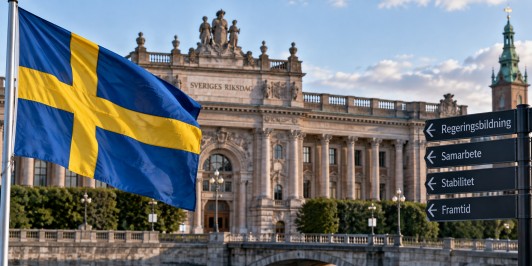
Sweden is currently in the throes of coalition talks following a parliamentary election marked by a tight race between political blocs. With nearly 95% of the votes tallied, the centre-left bloc, led by the Social Democrats, is narrowly ahead with 176 seats, while the right-leaning parties trail with 173 seats. The final count, including overseas ballots, is expected later this week, but the initial results have already set the stage for intense negotiations over the formation of the next government.
Magdalena Andersson, the leader of the Social Democrats, has commenced discussions to form potential coalition arrangements, aiming to reclaim governmental control. Meanwhile, outgoing Prime Minister Ulf Kristersson and his centre-right allies are also strategizing to maintain their hold on power. The slim margin between the two blocs has injected a degree of uncertainty into the proceedings, with the Centre Party emerging as a pivotal player in the coalition negotiations. However, disagreements persist about its potential collaboration with the Left Party.
The Centre Party is advocating for a stable government with a definitive centre-right orientation, explicitly ruling out partnerships with what it considers fringe political forces. On the other hand, several left-leaning parties are pushing for a change in government, cautioning that prolonged indecision could lead to another election. The Sweden Democrats, who previously supported the outgoing right-wing government, experienced a dip in support and are unlikely to be part of the next government. Nevertheless, their policies on immigration, integration, and crime continue to shape mainstream political discourse.
Kristersson is keeping his options open as he awaits the final election results. His party, the Moderates, along with their allies, face the daunting task of assembling a viable parliamentary majority. The Liberals and Christian Democrats have ruled out any cooperation with the Social Democrats, further complicating coalition possibilities. The new parliament is set to convene on September 28, with a potential vote on a prime minister scheduled for the following day. Should efforts to elect a prime minister repeatedly fail, Sweden may find itself headed for another election.
Forming a new government could take several weeks or even months. Historical context shows that after the 2022 election, it took 37 days to establish a government, while the 2018 election negotiations stretched over 134 days. As the situation unfolds, the roles of the Centre and Left parties could be crucial in determining which political bloc will lead Sweden’s next government.