
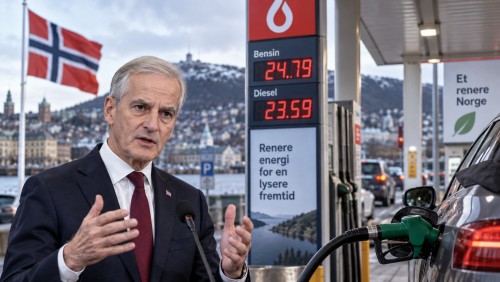
Norway’s political landscape is heating up as lawmakers debate the potential reintroduction of fuel tax relief amidst climbing global oil prices. The government, led by Prime Minister Jonas Gahr Støre, is under significant pressure to alleviate the financial burden on households and businesses after a previous temporary tax reduction ended on September 1.
The Center Party has announced its intention to propose the restoration of fuel tax cuts when the Norwegian Parliament reconvenes in October. This measure, if enacted, could decrease fuel prices by approximately NOK 4.50 per litre. The proposal has garnered support from both the Progress Party and the Christian Democrats, highlighting a growing consensus on the need for action.
Sylvi Listhaug, the leader of the Progress Party, has been vocal about the high fuel costs, emphasizing their impact on businesses, particularly within sectors heavily reliant on fuel, such as transport and construction. The party is urging the Conservative Party to back the tax cuts and has called for urgent discussions in Parliament to address the issue sooner rather than later.
Within the Conservative Party, the call for reduced fuel taxes is gaining momentum, with over 60 local chapters reportedly advocating for the change. This demand is particularly pronounced in regions where public transport options are limited and residents depend heavily on personal vehicles.
Despite Norway’s status as a prominent oil producer and the increasing adoption of electric vehicles, petrol and diesel remain essential for many households and industries. The high fuel prices have even led some motorists to travel to Sweden, where fuel costs are lower, underscoring the economic impact of the current situation.