
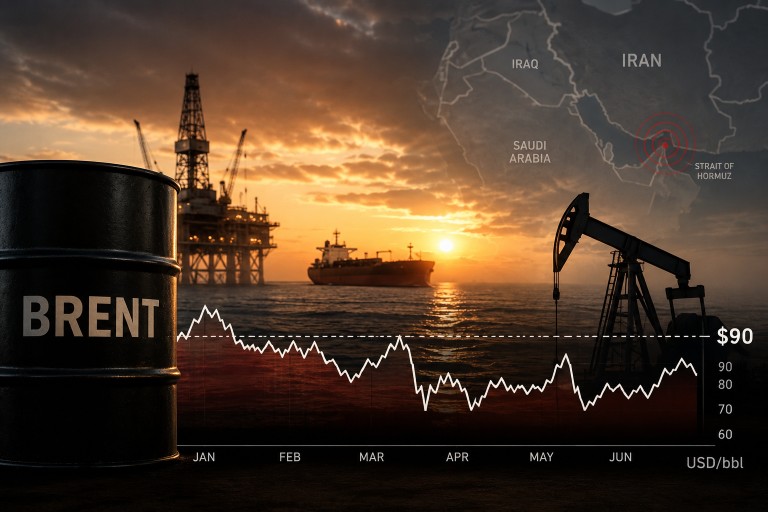
Brent crude oil is facing challenges in breaking the $90 per barrel threshold, despite its largest weekly gain since April. The price hovers near $85, with the West Texas Intermediate, the U.S. benchmark, approaching $80. The surge in prices follows heightened military tensions between the U.S. and Iran, impacting supply routes in the Middle East and reducing tanker traffic through the Strait of Hormuz, a crucial channel for about 20% of the world’s oil flow.
Amid these tensions, Brent crude peaked at $87.55 per barrel this week but has struggled to move higher. Analysts suggest that the market’s stability is due to ongoing diplomatic efforts, which could potentially resolve the conflict and limit further price increases. The oil market is currently monitoring global inventory levels for signs of significant declines, as well as the duration of the disruption in the Strait of Hormuz.
Despite the intensifying military exchanges, oil markets have remained relatively stable, with Brent trading in a narrow range. This indicates that investors expect the situation to de-escalate rather than worsen. The Strait of Hormuz remains a focal point for energy markets, as slowed tanker traffic prompts exporters to seek alternative routes to minimize reliance on this strategic passage.
The ripple effects of the situation extend beyond crude oil prices. In the United States, refining margins have increased due to tighter diesel and gasoline supplies, while European fuel markets are also feeling the strain. The situation is exacerbated by reduced Russian fuel exports, adding pressure to global energy supplies.
Market watchers are now focused on two potential developments: a significant drop in oil inventories that could indicate a supply shortage, and the success or failure of diplomatic efforts that could either resolve or prolong the Gulf disruption. Analysts believe that unless one of these scenarios occurs, Brent crude is likely to remain below the $90-per-barrel mark, even amid the heightened geopolitical risks.